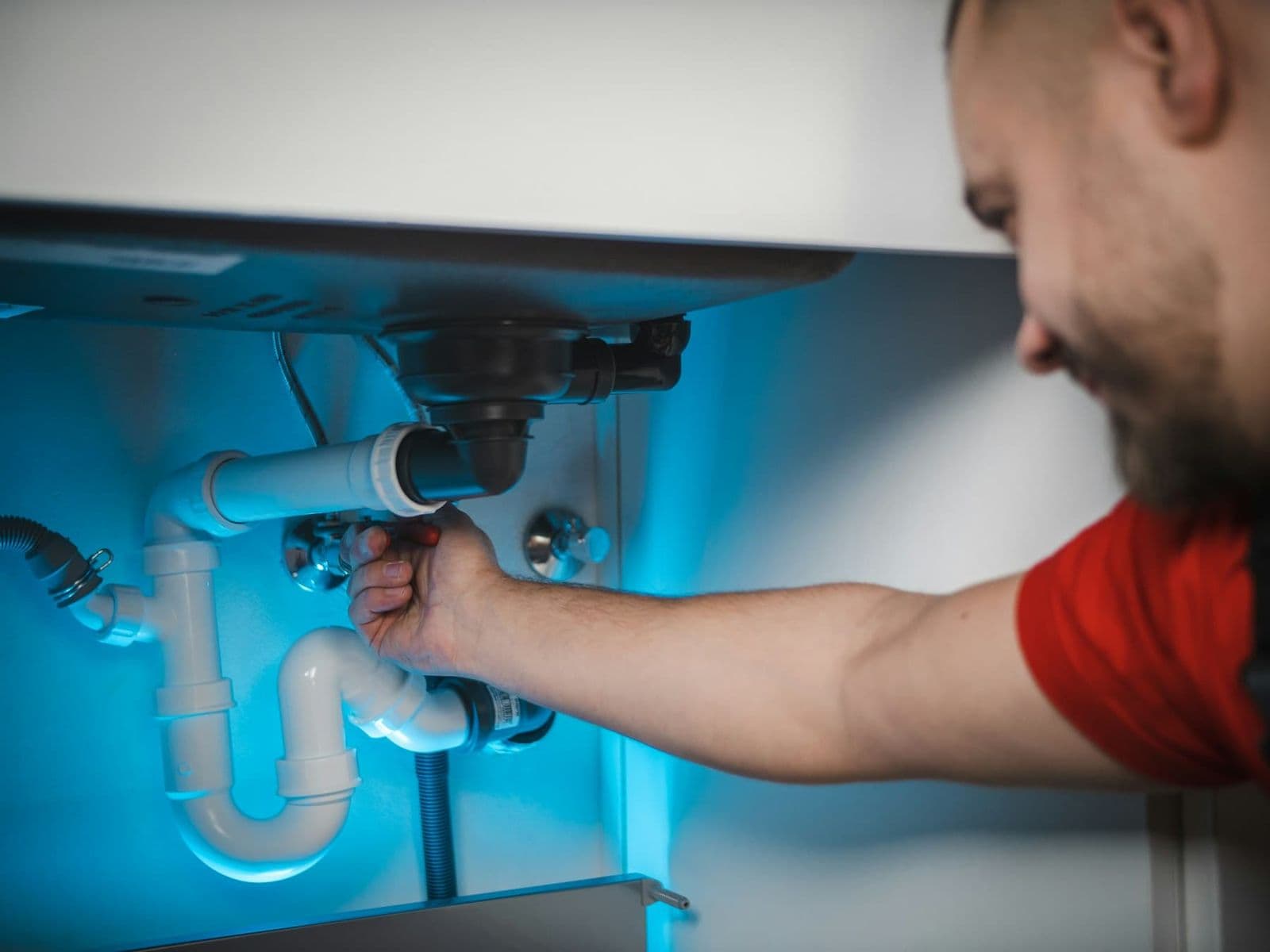
- Isolate the water first, under the basin or at the stopcock, and open the tap to confirm.
- Spout drips mean a worn washer or failed cartridge; leaks at the handle mean seals.
- Hold the tap body while undoing the headgear so the pipework underneath does not twist.
- Photograph a cartridge before shopping; they are specific to the maker and turn hot or cold.
- If a new washer still drips, the seat is pitted and replacing the tap is often cheaper.
A leaking tap is one of the few plumbing jobs where we are happy for you to have a go, provided you can isolate the water first and you know where the limits are. A single dripping tap can waste thousands of litres a year, and a tap that drips into a basin overnight in a quiet house is remarkably annoying. This guide covers the common types we see in Manchester homes and how to tell them apart.
Isolate it before anything else
Under most basins and sinks fitted in the last thirty years you will find a small isolation valve on each pipe, with a screwdriver slot. Turn the slot a quarter turn so it sits across the pipe rather than along it. Open the tap to confirm the water has stopped. If there is no isolation valve, or it does not close fully, turn off the water at the main stopcock instead and drain the pipe by opening the tap.
Do not skip this step. Taking a tap apart under pressure ends with water on the ceiling.
Work out what kind of tap you have
There are really three types. Traditional taps with separate hot and cold heads, which you turn several times to open, use a rubber washer that wears with age. Modern lever or quarter-turn taps use a ceramic disc cartridge, which does not wear in the same way but can crack, or can let grit through if the water has been off. Mixer taps with a single lever use a larger cartridge that controls both temperature and flow.
A tap that drips from the spout when closed usually has a worn washer or a failed cartridge. A tap that leaks from around the base of the handle when open usually needs a new O-ring or gland packing. A mixer that leaks from the base of the spout has a failed spout seal.
Replacing a washer
With the water off, remove the tap head. There is normally a small screw under a decorative cap. Undo the headgear with a spanner, holding the tap body so you do not twist the pipework underneath. The washer sits on the bottom of the headgear, held by a nut or pushed onto a stub. Take the old one to a hardware shop to match the size; half-inch and three-quarter-inch are the usual sizes. Refit and turn the water back on slowly.
If the drip continues with a new washer, the brass seat the washer presses against is probably pitted. That needs a reseating tool, and at that point it is often cheaper to replace the tap.
Replacing a cartridge
Ceramic cartridges are specific to the manufacturer and sometimes to the model. Remove the handle, undo the retaining nut and lift the cartridge out. Photograph it before you go shopping, and check whether it is a hot or cold cartridge, as they turn in opposite directions. Fit the replacement in the same orientation. If the tap came with the house and you cannot identify the make, a generic cartridge may not fit; this is where a lot of DIY attempts stall.
When to stop and call us
Call us if the isolation valve will not close or the stopcock is seized, if the tap body is corroded and parts will not move, if the pipework under the basin moves when you apply force, or if you have replaced the obvious part and the leak continues. We also see a lot of taps in Victorian terraces around Chorlton and Didsbury that have been fitted onto old lead or imperial pipework with adaptors, and those are worth leaving to someone with the fittings on the van.
Our taps and toilets service covers repairs and replacements, and we bring a range of cartridges and washers so the job is usually finished in one visit. A dripping tap is planned work rather than an emergency, and we quote it as such; the pricing page explains how that works. If the leak is more than a drip and you cannot isolate it, use the emergency line instead.
One more thing
When you turn the water back on, open the tap slowly and let it run for a minute. Any grit dislodged by the work will clear, and you will avoid the trapped air that makes taps bang. If the new tap or cartridge still leaks after that, it is usually the seating rather than the part you replaced.
Stop and call if the isolation valve or stopcock will not close, parts are corroded solid, or the pipework moves when you apply force.
Call 07343 065023