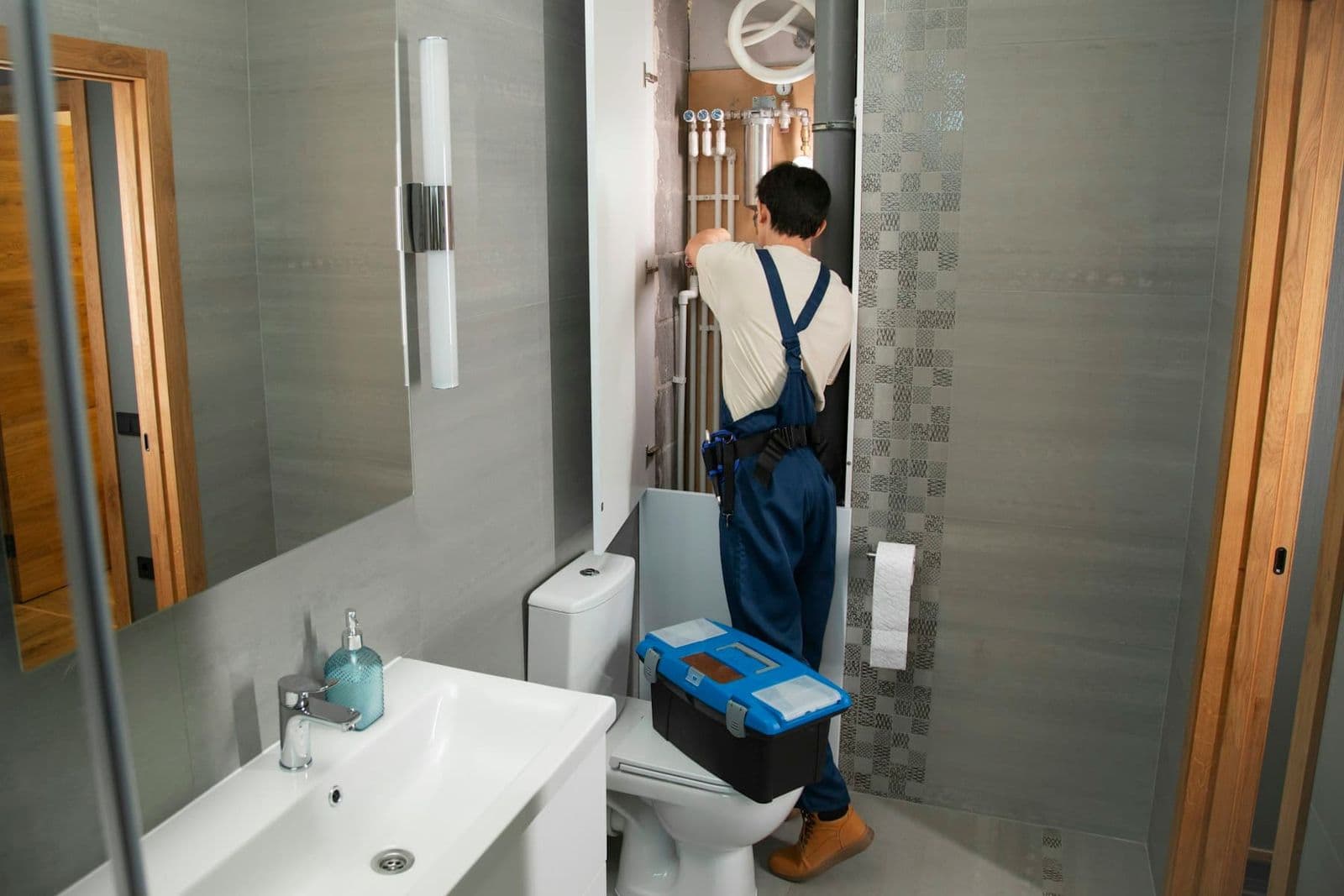
- Turn the stopcock clockwise until it stops, then open the cold taps to drain the pipes.
- Keep away from light fittings, sockets and the consumer unit if water is near them.
- Move belongings, put a bucket under drips, and never stand under a bulging ceiling.
- Do not attempt a repair with tape, putty or clamps; they fail at mains pressure.
- Call with three facts: where the water is, whether the stopcock is off, whether electrics are affected.
A burst pipe does not give you much notice. Sometimes it is a steady drip through a ceiling that turns into a stream; sometimes it is a bang behind a wall and water running down the stairs. Either way, the damage is done by volume and time, not by the size of the hole. A pipe leaking at mains pressure can put several hundred litres into a house in an hour.
We attend burst pipes across Manchester every week of the year, and the households that come out of it with the least damage are almost always the ones that did three simple things in the right order. None of them involve tools.
First: turn off the water at the stopcock
The internal stopcock is usually under the kitchen sink, though in older Manchester terraces it can be in the cellar, under the stairs or behind a kickboard. Turn it clockwise until it stops. If it is stiff, use a cloth for grip, but do not force it with a spanner; a stopcock that has not moved in twenty years can shear, and then you have two problems.
If you cannot find or move the internal stopcock, there is usually an external one under a small cover in the pavement or garden. It needs a stopcock key. If you have neither, tell us when you call and we will bring one.
Once the mains are off, open the cold tap at the kitchen sink and any other cold taps you can reach. This drains what is left in the pipework and takes the pressure off the burst.
Second: get the electrics out of the way
Water and electricity in the same room is the part of this that can hurt you. If water is coming through a ceiling near a light fitting, or pooling near sockets, do not touch the fitting and do not use the socket. If the water is anywhere near the consumer unit itself, leave it entirely alone and tell us; we will bring an electrician if one is needed.
Do not use a light switch in a wet room to see what is happening. Use a torch or your phone.
Third: move what you can and catch what you cannot
Lift rugs, move furniture, take anything electrical off the floor. Put a bucket or washing-up bowl under a dripping ceiling. If a ceiling is bulging, do not stand under it; a plasterboard ceiling holding water can come down without warning. We would rather you left the room and called us than stood under it deciding what to do.
Turn off the central heating and hot water at the boiler controls. A heating system that is losing water can run dry and damage itself.
What you should not do
Do not attempt a repair. Tape, putty and clamps sold as temporary fixes are unreliable at mains pressure and give a false sense of security. Do not turn the water back on to see if the leak has stopped. Do not go into a cellar that is flooding; there may be live circuits at floor level.
Above all, do not wait until the morning to see if it settles. Water finds its way into floor voids, insulation and party walls, and the drying-out bill grows every hour.
What happens when you call us
Call 07343 065023 and tell us three things: where the water is coming from, whether the stopcock is off, and whether electrics are affected. We give you a price for the callout before an engineer leaves the depot, as we do with every job, and confirm a realistic arrival time. In the priority areas we cover, that is normally within the hour.
When we arrive we isolate the section of pipe and make a permanent repair where possible, or a proper temporary one where the pipe needs replacing in daylight. We also check the rest of the run, because a pipe that has burst in one place is often thin in others. If the ceiling or floor needs drying out, we tell you honestly what is involved.
Our leaks and burst pipes page covers what a repair typically involves. Out of hours, the emergency plumber page has response times for your area. Whatever the hour, the emergency line is answered by a person, not a recording.
Preventing the next one
Most bursts we see in Manchester are either frost damage to pipes in unheated lofts and outbuildings, or old lead and galvanised steel pipework in pre-war houses that has finally given up. Both are worth a look before winter. Insulating exposed pipework is cheap; knowing where your stopcock is and checking it turns freely takes two minutes. If you are not sure what you have behind the walls, our plumbing maintenance visits include a pipework check.
Stop and call if the stopcock will not move, water is near electrics, a ceiling is bulging, or a cellar is flooding.
Call 07343 065023